Dazed Aimée Grant Cumberbatch Dazed Aimée Grant Cumberbatch

‘Like Avon But For CBD’: The Endometriosis Sufferers Propping Up CBD MLMs
The UK CBD industry is booming. Products are being sold everywhere from B&M bargains for £1 to boutiques where CBD skincare can set you back up to £60 a tube. The most visible part of CBD’s upward trend may be wellness, but it’s also being used to help manage the symptoms of chronic illnesses. 

A recent report from the Centre for Medical Cannabis found 41 per cent of those using CBD in the past year did so for medicinal purposes. And beyond using CBD to help with symptoms, those with chronic conditions are beginning to sell it too.

As someone with endometriosis, I’ve noticed an uptick in CBD products packaged as ‘treatments’ for pelvic pain and in endometriosis sufferers taking and selling CBD. The five women I spoke to who have endometriosis and sell CBD first tried it as an alternative to painkillers like naproxen, tramadol, codeine, and even morphine they previously required but are now unable to. 

Jo Biggerstaffe Charlseton, a distributor for a CBD company, says painkillers are becoming more difficult to acquire on the NHS. “There’s so many people out there that are taking shedloads of meds (and) are having them cut because of the (risk of an) opioid crisis. The doctor goes: ‘Sorry we’re cutting down your codeine tablets, we’re cutting down your morphine’. They need to find alternatives.” And even when obtainable, painkillers have side-effects which makes long-term use unappetising, if not impossible. 

No wonder CBD, which is non-addictive and seems like a more natural and sustainable option, is attractive, as Dr Yewande Okuleye, Cannabis Medicine Health Strategist at the University of Leicester explains: "This isn’t a new phenomenon. It’s the latest iteration of self-medication in a different patient group, which has come to our attention because of the increased popularity of CBD as an alternative treatment.”

Lack of regulation means brands can make misleading claims with little consequence. The UK’s Centre for Medical cannabis found 62 per cent of high street CBD products did not contain the amount of CBD claimed. And according to current guidelines, companies shouldn’t say their CBD product helps with any medical issue, but I’ve seen countless claiming to soothe, alleviate, treat and even cure everything from minor ailments to serious illnesses. 

Frankie Penfold, a team manager for a multi-level marketing CBD company who describes her job as “like Avon but for CBD” says: “It’s pretty horrendous when it comes to find(ing) out information. I reckon it took me a year to understand it enough to be confident with how to find good oil.” Meanwhile, Jo tested 11 different CBD brands before finding one she feels works. 

Once they have found a product they feel is effective, endometriosis sufferers naturally want to spread the word to save others money and time. And after recommending, for many, selling seems like a logical next step.

Sally Davies*, who isn’t allowed to talk publicly about the CBD company she works for, says: “I believed in it so much that I signed up to be a distributor. So many of my friends have medical issues and pain issues. I'm not one for fads like Slim Fast – I get on my high horse. But I said to them, you know me well enough to know I would not be talking to you about something if I didn't absolutely believe it.”

For those I spoke to, money wasn’t their main motivator in selling. As Frankie notes: “Helping people is my main priority, the money is a bonus.” However, setting up one’s own business or working for companies which allow flexible/home-working is an understandably attractive prospect for chronic pain sufferers, especially those with children.

In the CBD industry, multi-level marketing schemes proliferate. Though they aren’t as new (established companies like Avon and Body Shop at Home are MLMs), like CBD they are on the rise, and their legitimacy has proven more than a little dubious.

To join an MLM as a distributor (a non-salaried, commission-based role) you’ll usually have to pay a joining fee or buy several products. Some companies may even require distributors to do so regularly, and, if expensive, those involved can easily get into debt. Companies use distributors to help them tap into their pre-existing networks. Women with endometriosis are frequently part of social media support groups or have friends with chronic illnesses. From what we know of the prevailing MLM blueprint – from supplements, cosmetic brands, and clothing lines like Herbalife and Mary Kay – they prey on stay-at-home mothers and the unemployed, people at their most vulnerable, in need of relief, community, and cash.

Product sales are often not how distributors make serious money, but by signing up other sellers beneath them whose sales they then get a percentage of. Those who are “downline” (further down the MLM food chain) may find it hard to make anywhere near as much money as those upline, and many similar schemes have made headlines when distributors’ experiences don’t live up to expectations. 

The defined difference between MLMs and pyramid schemes is that MLMs centre on a product, whereas with pyramid schemes, it’s usually just the promise of one, and  it relies on recruitment overall. As both the CBD industry and CBD MLMs are so new, most of the women I spoke to were not far downline, which makes potential earnings higher and experiences – so far – more positive. It means all the women I speak to reject any notion that they’re in disadvantageous positions.

Frankie, who makes her entire salary selling CBD, said she isn’t pressured to sell, but acknowledges that’s not always the case. “You can sign up and do nothing. I know that (with) so many companies, you have to have orders and you're forking out money when you shouldn’t be. When it comes to multi-level marketing, unless you know the founders, you’re a number in the system.”

She continues: “Thankfully with (the current) company, because we’re so small still, and it’s so young, I have first hand communication with the founders. I'm doing well and I'm classed as a team manager so I've got most of the UK in my team which is great. I think I've really hit the jackpot with this company.” Frankie adds that she has worked for another MLM whose operations were not all above board. She tells me: “I had a bad experience because they were sending (the CBD product) illegally to the UK, and there was a lot of false advertising from the top dogs, from head office. That’s something that I really regret.”

As CBD industry MLMs remain so new, problematic trends and widespread contentious practices are yet to be seriously documented. Investigations into individual CBD companies in the US have however drawn concerning conclusions – Hempworx, which began life as My Daily Choice before its sudden pivot to CBD-focused products, has been found to have made over 100 illegitimate health claims by The Extract. The company was also reportedly found to be inflating the numbers sellers were earning – around $5,000 a month, unproved figures. Other brands, such as Kannaway, Dose of Nature, and First Fitness Nutrition, have been criticised for a range of issues, including lack of lab testing and low income potential – 22 MLMs, including Dose of Nature, were issued with FDA official warning lettters in the US last year. In the UK, the Food Standards Agency ruled in February that CBD products – from oils to drinks and food – had to be registered by March 2021 or they would be pulled from shelves. As they move to combat misleading market claims, high prices, and health concerns, the work to regulate the market could significantly impact the CBD MLMs.

Previous bad experiences with doctors can lead those with endometriosis to mistrust the medical system, so sufferers rely on their network for information in the absence of other guidance. Dr Okuleye notes: “Although self-medication might provide relief for chronic pain, the potency and purity of wellness CBD products requires closer scrutiny to ensure patients can maximise the therapeutic potential of medical cannabis. Ideally, this should be within a research setting which evaluates efficacy, safety, and dosage.”

The presence of distributors within Facebook support groups is contentious. They are often discouraged from promoting products and many group rules warn that promotional posts will be deleted and repeat offenders blocked.

Alex Cohen, who runs the small, independent company CBD Buddy, is suspicious of MLMs. “I'm not interested in building a huge conglomerate. I'm also not interested in MLM schemes, which, frankly, I think, are dangerous. I want to do (something) legitimate and uncomplicated.” She says she has friends who have worked for beauty MLMs like Arbonne, adding: “There’s something slightly not right about the fact that you do have to do this extra marketing. I think it’s counterproductive. If you have a product that is legitimately good and helping people, I just don't think it’s necessary.”

Cohen has some advice which may be helpful for those trying to navigate both the complicated world of buying and selling CBD: “If it seems too good to be true, it probably is.” 

Read More
Bustle Aimée Grant Cumberbatch Bustle Aimée Grant Cumberbatch

Why It's Harder For People Of Colour To Get Diagnosed With Endometriosis

f you happen to be a person of colour, getting diagnosed with endometriosis — an illness that already takes on average seven to eight years to diagnose in the UK — can be fraught with added delays. Delays in the diagnosis of endometriosis can lead to complications and affect treatment further down the line.
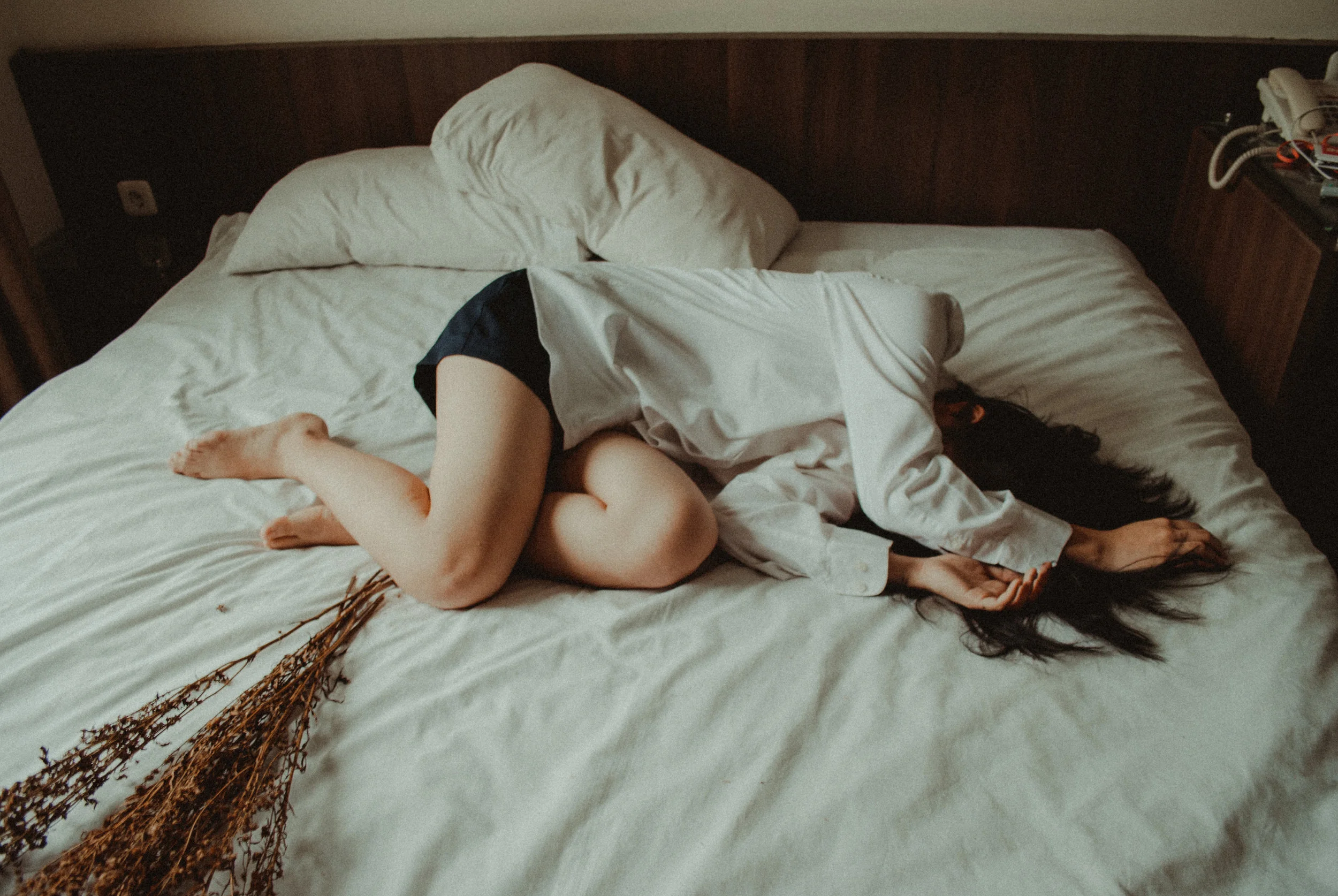
If you google "people with endometriosis" you'll see pictures of women bent over, hands clutched to their stomachs. Aside from their gender and their postures indicating pain, the thing most of the people pictured have in common is that they're white. If you happen to be a person of colour, getting diagnosed with endometriosis — an illness that already takes on average seven to eight years to diagnose in the UK — can be fraught with added delays. Delays in the diagnosis of endometriosis can lead to complications and affect treatment further down the line.

The reasons people of colour can face added difficulty in getting a definitive diagnosis (which can currently only be done by a form of key-hole surgery called laparoscopy) range from the underestimation of their pain in the medical system to cultural taboos within their own communities.

As per the NHS website, endometriosis is a condition where "tissue similar to the lining of the womb" is found elsewhere in the body. One of the most common symptoms is pain. Studies have shown that it's difficult enough to get the medical system to take the pain of cis women seriously in general, but this issue is only amplified for cis women of colour, and cis black women especially. One study by the University of California found that in U.S. emergency rooms, strong painkillers were prescribed to white patients far more frequently than they were to patients from minority ethnic groups.

Jhumka Gupta, assistant professor of Global and Community Health at George Mason University, explains that more research is needed into the "health inequities in delayed [endometriosis] diagnosis faced by [people] of colour." She says, "decades of public health, medical, and sociology research has documented the existence of racial inequities in health and healthcare. Research [in the U.S.] has documented that black patients are systematically under-treated for pain conditions in comparison to white patients [and] this pattern has been shown in studies with women, men, and children."

Studies show that getting a definitive endometriosis diagnosis is rarely straightforward. It often requires months, if not years, of advocating from the patient's side before doctors take symptoms seriously. A 2016 study by the British government of 2,600 people with endometriosis found that 40 percent had visited the doctor 10 or more times before they were referred to a specialist.

"The health care system may place a double jeopardy on women of colour."

As the cause of endometriosis pain is internal and often does not show up on initial scans, in many cases a referral to a specialist relies on a GP trusting a person's account of their own pain. The overlap between the distrust of female pain and the distrust of pain among those from minority ethnic groups makes reaching a definitive diagnosis all the more complex. Gupta states, "The health care system may place a double jeopardy on women of colour who not only grapple with clinical gender bias, but also implicit racial bias."

And there's another factor at play. Recent research suggests that endometriosis is has been mistakenly characterised as "a white women's disease". Indeed, a recent Twitter poll conducted by gynaecologist Pietro Bortoletto saw 48 percent of its 128 respondents say that they thought people with endometriosis were usually white. This is despite the fact that there is some evidence to suggest race is a risk factor for the condition. In fact, Bortoletto's entire thread on the subject provides a useful look back at how endometriosis has come to be characterised in this way.

The other glaring issue with endometriosis being perceived as a "white women's disease" is its exclusion of trans and non-binary sufferers. "This is an additional burden faced by people with uteruses who aren't cis women," one non-binary sufferer told Clue. As another trans endometriosis sufferer recalled to EndoFound: "When you're sitting in that waiting room, looking like a man, and then someone brings you your clipboard, and you're filling it out, I mean people are staring at you, like, Who is this person? A lot of trans men in general, a lot of them will completely avoid going to the OB-GYN just because it's a female thing, and it gives them a lot of anxiety and a lot of stress.”

There is some evidence to suggest race is a risk factor for the condition.

It follows that the misconception around race could make doctors less likely to consider endometriosis when people of colour present with pelvic pain, heavy periods, or other symptoms. Lala Ireland, founder of social enterprise Feminine Vitae, also argues that the prevalence of uterine fibroids among people of African-Caribbean heritage (a condition whose symptoms are similar to those of endometriosis), could act as a red herring when it comes to diagnosing black and mixed race black people with endometriosis.

People of colour in the UK have reduced power and socio-economic status compared to their white counterparts, and this too arguably contributes to delays in diagnosis. If you don't have the financial ability to turn to private treatment, and if you do not have the same power within society that being white affords, it is that bit harder to get your doctors to listen to your accounts, to receive specialist care, and therefore a definitive diagnosis.

Ireland argues this impact could be particularly acute for first generation immigrants. "There's a distinction in terms of socioeconomic background. If you're talking about a woman from a first generation Afro-Caribbean background, she may have found it much harder to be assertive in front of a doctor as opposed to someone who is several generations down the line."

But delays in diagnosis can start long before a person enters a doctors' surgery or health centre. Due to taboos around menstruation and stereotypes around pain, which can be more pronounced among certain minority ethnic groups, many people of colour suffer painful or heavy periods in silence.

"I wouldn't wish being African and having endometriosis on my worst enemy."

This is something Marian Kwei, a stylist and fashion editor who was born in Gambia, has experienced. She told me, "Where I'm from, women do not talk too much about their pain. I was born in Gambia [and] there is a phrase which means 'swallow it'. So if you're having pain it means put up with it, just contain it without telling anyone.

"That's the situation I dealt with in reference to my endometriosis. It was terrible for me, it was very ostracising. Here is this pain which I can't talk about because I'm supposed to be swallowing it down. I wouldn't wish being African and having endometriosis on my worst enemy," she says.

Dr Anita Mitra, gynaecologist, author, and MoodyMonth.com contributor adds, "Endometriosis is a condition that can cause heavy and excruciatingly painful periods and pain during sex, as well as fertility issues. These are all topics that are known to be associated with stigma in society as a whole, but especially in black, Asian & minority ethnic communities.

"Understanding that these symptoms are a cause for concern is the first step to seeking help, and many [patients], unfortunately, think they are things they just need to 'put up with' because they're not taught about this in schools for example. And because [patients] may feel unable to talk about it their friends and family, it can remain a mystery."

No matter how empowered the patient, they need a doctor who is willing to listen.

Changes have recently been announced which will make lessons on endometriosis and other menstrual health conditions compulsory in English schools. This is a vital first step, but their effectiveness for people of colour depends on them putting forward representative picture of who is affected by endometriosis, as well as taking into account how race and ethnicity may impact a patient's experience of the illness.

And it's not just about empowering those who might have the condition, it's also changing attitudes and misconceptions within society and the medical system that serves it. No matter how empowered the patient, they need a doctor who is willing to listen if their pain, heavy bleeding, fatigue, or all three are to be taken seriously.

Mitra has ideas about how this can be achieved, "[Patients] may feel unable to talk to their doctor about issues of a sexual nature, and may feel they will be accused of being promiscuous or leading an irresponsible sex life which [should never be] the case," she says.

"Sharing a GP with other family members may also be a concern, but [patients] should be assured that their doctor is not allowed to talk to their family, or other members of the community due to strict confidentiality rules."

She concludes, "Medical professionals do not feel shy to talk about these issues, but I think we should always seek to remind ourselves that not everyone feels the same way, and ensure we offer a sympathetic, non-judgmental ear to our patients, and answer their questions sensitively."

Originally published on Bustle UK

Read More
Bustle Aimée Grant Cumberbatch Bustle Aimée Grant Cumberbatch

What's It Like Living With Endometriosis? 6 People With The Condition Share Their Stories

In this piece six people who live with endometriosis share how the condition affects their life day to day.* Although coping with a chronic illness is never easy, their words are an inspiring and important lesson in finding solace in friendship and hope in unexpected places, and, most crucially, they highlight why it's time endometriosis and its impacts were taken more seriously.

In this piece six people who live with endometriosis share how the condition affects their life day to day.* Although coping with a chronic illness is never easy, their words are an inspiring and important lesson in finding solace in friendship and hope in unexpected places, and, most crucially, they highlight why it's time endometriosis and its impact were taken more seriously.

It takes all my energy to even attempt a shower.

Living with endometriosis can be summed up in two words — it’s interesting. You never know what day you are going to have because endo likes to creep in whenever she can and throw off your day just like that. I have good days when pain levels are bearable and I can appear like a normal functioning person in society, but unfortunately those days are few and far between. Most days you can find me confined to my house struggling to do even the simplest of things such as walking up the stairs. It takes all my energy to even attempt a shower.

The majority of the time my body feels like it’s been carved open like a pumpkin on Halloween. The nausea, dizziness, bloating, and fatigue all add to the generally feeling of being hit by a bus most days. The pain takes my breath away and I have to bite the side of my cheek to stop me from screaming. There have been times where I have collapsed from the pain.

I have been in a chemically induced menopause for over 19 months now in a bid to get control of my pain but this no longer gives me any relief. I have been unable to work for almost two years because of endometriosis and the toll it has taken on my body. Endometriosis is so much more than just a bad period.

Jemma

I have no control over my own body. I can feel utterly powerless.

The devastating effects of adenomyosis and endometriosis can be both physically and mentally exhausting. On bad days the pain can be so severe that either I vomit or can’t move. On most days, I still suffer from varying degrees of pain in my lower abdomen, lower back and a hot/sharp sensation radiating up and down my legs. It is rare to have a truly painless day.

Even on "good" days (where pain is manageable), I can become so swollen that I look like I’m pregnant. I try my best to laugh this off and disguise it under my ever-growing collection of oversized clothes. That said, I can still feel heartbroken in the knowledge that there’s nothing I can do about it — I have no control over the size of my own belly. I have no control over my own body. I can feel utterly powerless.

I laugh regularly, I try to stay positive, and I am lucky enough to have hugely supportive friends and family. That does not mean I don't find it tough and it does not mean I'm not suffering every single day. Just because you can't see something doesn't mean it isn't there.

Rosy

You go from doctor to doctor, hoping that someone will take you seriously.

Living with endometriosis is hard. Really hard. The disease affects over 176 million people worldwide, yet having it makes you feel so alone. The pain is worse than I can even describe. It makes you the best actor. Smiling through horrible pain, working through horrible pain, going to school through horrible pain, but still being able to tell people you’re “fine” because you know they won’t get it when you try to explain why your pain is different than regular period cramps.

Every day is a balancing act of doing too much or not doing enough. If you rest, you’re “lazy”, but if you push yourself too hard, you risk being in bed for days. The misery that comes along with the pain is suffocating, and then comes the emotional toll the disease takes. Going from doctor to doctor, hoping that someone will take you seriously. Having your “script” rehearsed when you visit the emergency room so they don’t label you as “one of those patients”. Feeling so desperate for relief that you’ll figuratively do anything to make it stop. Defending yourself when doctors make you feel like the pain may just be in your head. Imagine what that does to a person?

Jenneh

It slowly but surely drove me from my job.

Imagine having your own body trying to destroy you from the inside out. That’s the reality for so many with endometriosis. We can’t prevent it and we can’t stop it because there is no cure. It has affected my whole life. It slowly but surely drove me from my job because the pain was so severe that I couldn’t get out of bed. I felt so isolated because, how was I supposed to explain to people how I felt when I looked fine on the outside. I couldn’t physically keep up with my friends and it definitely created a wedge. It’s affected my relationship because I need support in everything. My boyfriend has had to be more than a boyfriend, he’s become my carer and helps me with everything. It’s exhausting and has had a huge impact on my mental health. I’m scared for the future and how my health is going to be. Hopefully one day there will be a cure.

Nicole

I have made some life-long friendships.

It's very hard to put my finger on exactly how endometriosis changed my life, because I haven't lived a life without it. From being a kid and starting my period, confused and scared as to why I bled through my pad, underwear, and school skirt, up until now — nearly 25, having had two surgeries with another looming to relieve some of the side affects of this confusing condition. Cramps, bloating, nausea, brain fog, UTIs, bleeding when I use the toilet, and this is my every day. It's a real blood bath (figuratively) when my period arrives.

Endometriosis has ruined relationships, put my social life at a halt, nearly gotten me fired, embarrassed me, caught me short and destroyed my mental health, but the biggest thing I've taken from having this curious condition is the community surrounding it. I have made some life-long friendships, I have people check in on me every now and then (and vice-versa) and have even received a care package from an amazing endo-sister and blogger. Every day I am grateful for the sisters I share this condition with. I don’t think I could get through without them.

Alice

I am strangely thankful for it.

Endometriosis isn’t life threatening, but it's life debilitating which robs you from living a normal life. Living with endometriosis is exhausting, frustrating, painful, and goddamn unfair. I am 25 and have my 10th surgery at the end of his month. That’s all down to damage endometriosis has caused. I long for a day where I will wake up with no pain, but I am also strangely thankful as it has taught me to appreciate everything in life no matter how small.

Anna

*Responses have been edited for length and clarity.

Read More